
By Jen, Founder of Tidy Tot. Tidy Tot is an award-winning Sensory Weaning and Feeding brand - creating award winning feeding bibs and accessories that make life easier for parents and fun for their babies as they learn to self-feed.
Whether you’re using baby wipes, a flannel or a wash cloth, many parents will recognise this moment:
Mealtime is going well… and then the clean-up begins. The cloth comes out - and suddenly, so do the tears.
It’s incredibly common, and there is actually quite a bit of science behind why babies often react this way.
Why babies resist having their face wiped
There are three key reasons why this part of the routine can feel so difficult for little ones:
1. It can feel uncomfortable
During weaning, your baby’s skin - especially around the mouth and chin - can become sensitive.
Food, dribble and constant wiping can all contribute to soreness. So when a damp cloth comes towards their face, it may feel irritating, and of course - they react.
2. Leaning to eat is a sensory rich experience.
Learning to eat is about much more than just taste. Babies actually engage 8 of their senses as they learn to eat, and it can be exhausting! For many babies, particularly those that are sensitive - this final step can just feel a little overwhelming, and all a little ‘too much’.

2. It triggers a natural reflex
When we wipe a baby’s face, we often (without realising) cover both their nose and mouth at the same time.
Babies have a strong, instinctive response to anything that interferes with their airways. It’s a built-in protective reflex. So turning their head, pushing your hand away, or becoming upset isn’t always about exerting their independence, it’s a completely natural, physiological response.
Eating as a Sensory Rich experience
As we’ve touched upon above, for your baby, food isn’t just something to eat - it’s something to experience. They’re learning through 8 of their senses, including:
· touch
· texture
· temperature
· smell
· movement
Here at Tidy Tot, we refer to this as Sensory Weaning – where we acknowledge that exploration is just as important as eating.
So when we rush to wipe food away from their hands, face or tray, we’re not just cleaning up - we’re interrupting part of that learning process – which can feel frustrating for your baby.
That doesn’t mean avoiding clean-up altogether, of course. But it does mean being a little more mindful of when and how we do it.
So what can you do instead?
A few small changes can make a big difference to how your baby experiences this part of mealtime:
1. Leave clean-up until the end
Unless food is causing discomfort (for example, near the eyes), try to resist wiping your baby’s face or hands during the meal. Allowing them to feel food on their skin - even in their hair - is part of how they learn.
It may feel messy, but it’s also meaningful.
2. Let your baby take the lead
Clean-up doesn’t have to be something done to your baby - it can be something they’re part of.
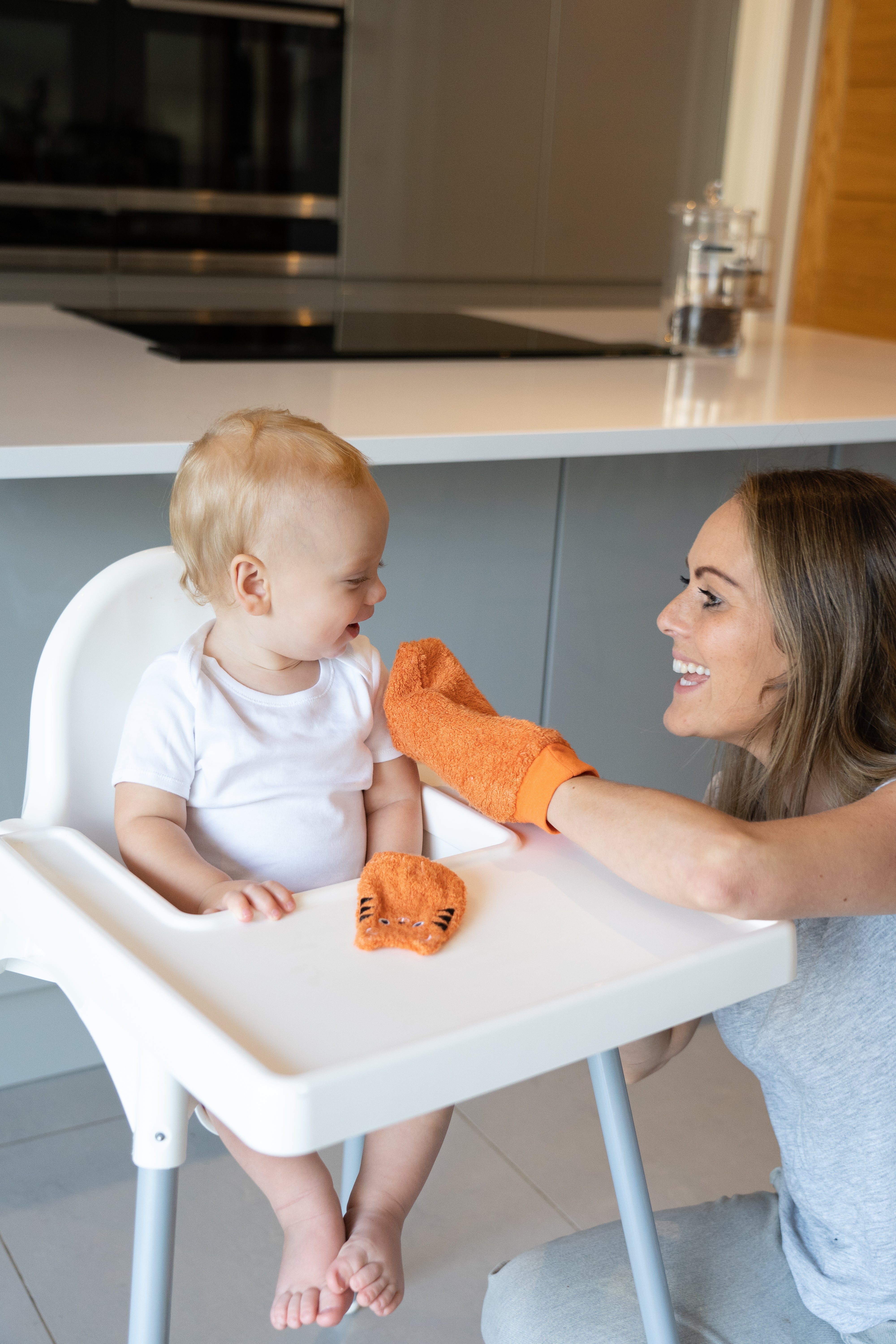
Giving them their own wash mitt to explore and copy you turns it into a shared activity rather than a battle.
With our Tidy Tot Wash Mitts, made from baby-soft bamboo which is kind to the most sensitive of skin - You can use an adult-sized mitt yourself, and a smaller one for your baby- letting them mimic your movements.
Not only does this reduce resistance, but it also supports:
· hand-eye coordination
· fine motor skills
· and independence

3. Be mindful of sensitive skin
When skin is already delicate, the materials you use really matter.
Reusable cloths made from bamboo, like our Tidy Tot Wash Mitts, are a great option- they’re naturally soft, gentle on sensitive skin, and less abrasive (and kinder to the environment) than disposable wipes.
4. Use tools that give you more control
A wash mitt can offer more precision than a traditional flannel or wipe.
Because it fits over your hand, you can:
· wipe more gently
· target specific areas
· and avoid covering your baby’s nose and mouth at the same time
This alone can make the experience feel much less overwhelming for your baby.
5. Make it part of the routine (and even a little fun)
Like many parts of parenting, tone matters.
A calm, predictable approach - perhaps with a familiar song, a game, or a playful moment - can help your baby feel more at ease.
Over time, what was once a point of resistance can become just another part of the rhythm of their day.
A gentler approach to clean-up
When we start to see mealtimes through a sensory lens, something shifts. The mess becomes part of the learning, and the resistance to mid-meal wiping starts to make sense.
And even the end-of-meal clean-up becomes less about rushing to tidy everything away - and more about gently guiding your baby from one experience to the next.
With the right approach (and the right tools), it’s absolutely possible to make this part of the routine feel calmer, easier, and even enjoyable for both of you.

Share:
Easter Travel Essentials - Don't Forget Your 100ml Minis 🎒
Is your baby's bath product secretly causing dry skin?